
The Science of Hope During Uncertain Times
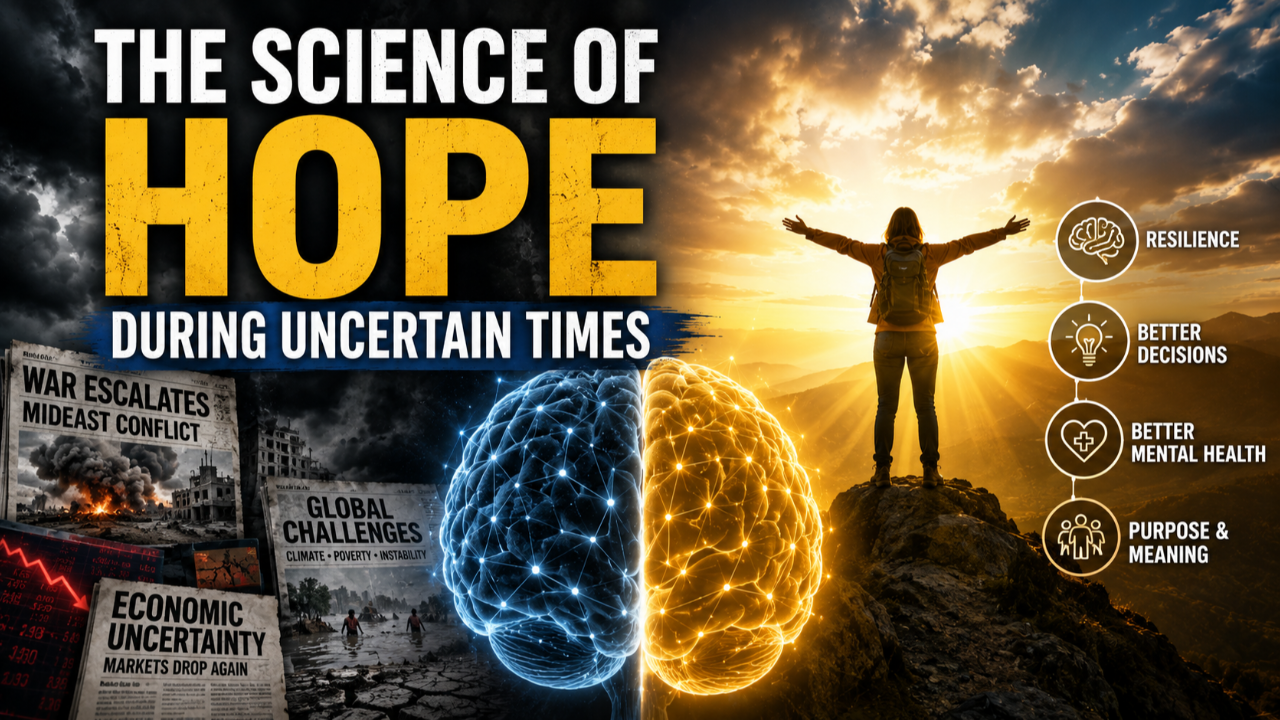
There are moments when hope can feel almost irresponsible. Wars dominate the headlines, economic forecasts wobble, institutions lose public trust, and entire populations seem to be living with a quiet background hum of anxiety. The IMF’s July 2026 outlook describes a global economy that is still growing but unevenly, shaped by war-related energy shocks in some regions and technology-driven growth in others. Reuters has also reported continuing concern around the Iran war, energy markets, inflation pressure, and broader geopolitical uncertainty.
In a world like that, optimism can sound naïve. But science suggests something more interesting: hope is not denial. Real hope is a psychological resource. It helps people think more clearly, recover more effectively, and keep taking constructive action when circumstances feel unstable. The mistake is assuming hope means pretending everything is fine. It does not. Hope means believing that your choices still matter, even when the outcome is...